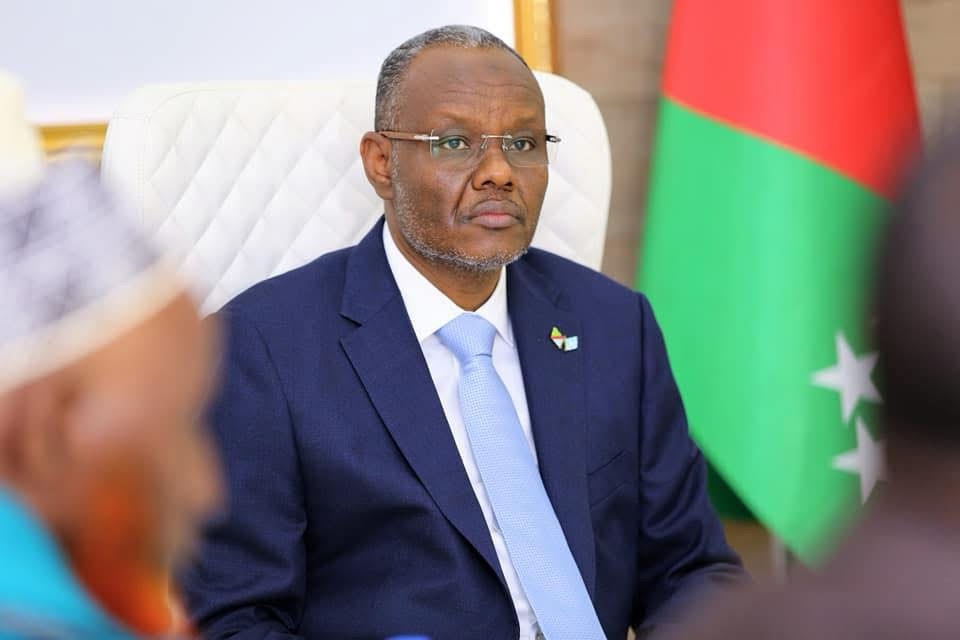
Baydhabo, Somalia – In a surprising development, the President of the South West State of Somalia, Abdiasis Xasan Maxamed Laftagareen, has resigned from his position. The move comes after Somali federal government forces, accompanied by troops known as the South West Security Forces, entered Baydhabo, the interim capital of the South West State.

Laftagareen, who was recently elected in a historic vote as the president of South West State, did not provide details about his next steps. Reports about his current location are conflicting. Some sources suggest he may have left the country, while others indicate he remains inside the presidential compound.
The resignation marks a significant political shift in the region, raising questions about the future leadership of South West State. In an official announcement on the state’s social media page, it was stated that Ahmed Mohamed Hussein, the finance minister of South West State, will serve as acting president until a new election can be organized.
In his resignation post on Facebook, Abdiasis Laftagareen said he made the decision due to the ongoing security situation, highlighting the challenges faced by the state amid military movements. Analysts note that the federal government’s operation in Baydhabo could reshape local governance and influence upcoming political decisions in the region.
This sudden leadership change has drawn attention across Somalia and the Horn of Africa, as observers monitor potential impacts on governance, security, and the peace process. The situation remains fluid, and further updates are expected regarding Laftagareen’s whereabouts and the interim administration’s plans.
For residents of South West State, the resignation introduces uncertainty about administrative continuity and the stability of local institutions. Meanwhile, federal authorities have not commented officially on the resignation or the military operation in Baydhabo.
💡 Stay tuned: TheSomali.com will provide real-time updates as this story develops, including reactions from political leaders, civil society, and security analysts.