BAIDOA, Somalia — April 5, 2026
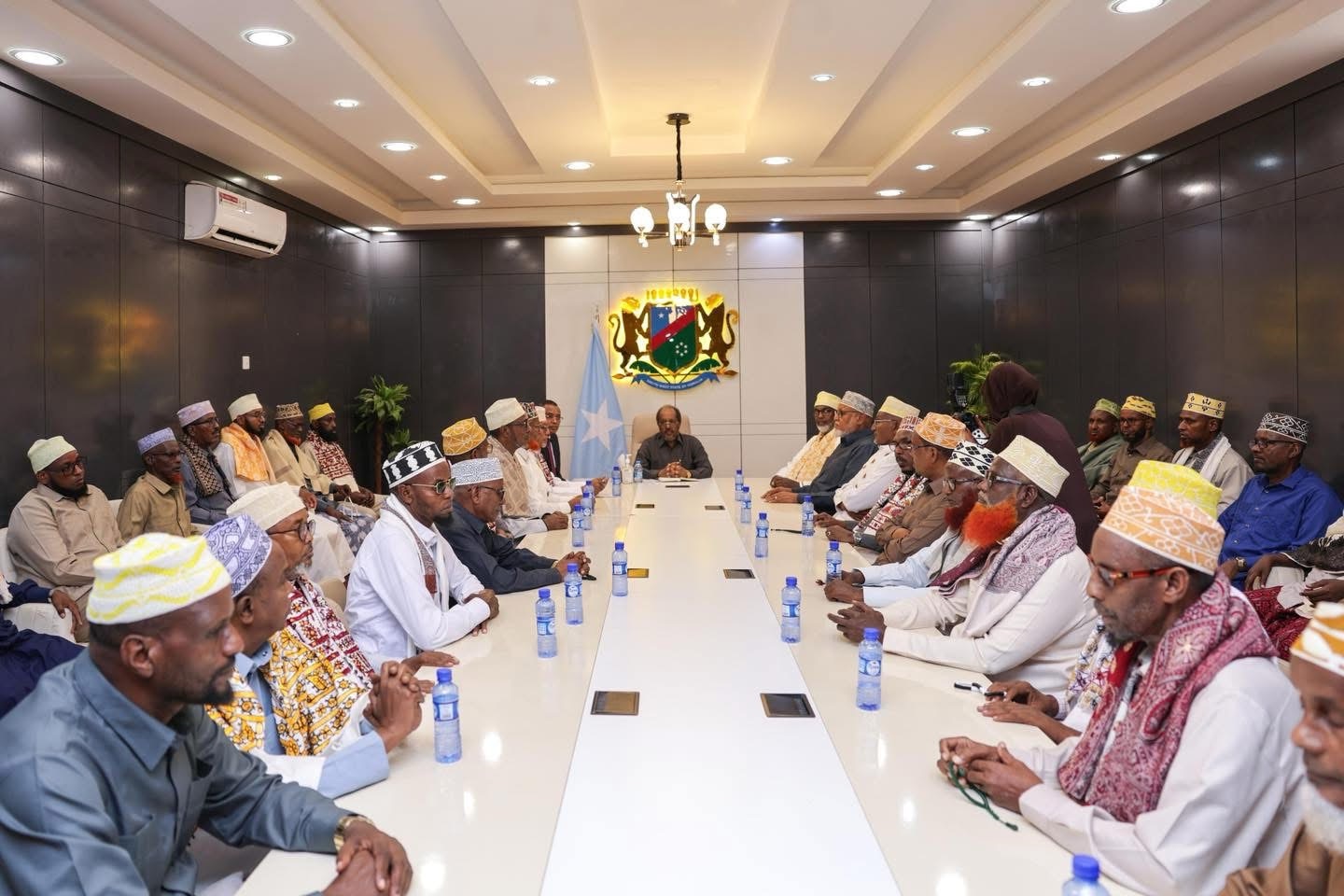
Hassan Sheikh Mohamud, the president of Somalia, met on Saturday with influential traditional elders in Baidoa, seeking to build support for a transition to direct elections and to reinforce stability in one of the country’s key federal states.
The gathering, which included leaders from Southwest State of Somalia, focused on a range of pressing issues, from security and governance to drought relief and national reconciliation. But at its core was a central political objective: advancing Somalia’s long-delayed plan to move toward a one-person, one-vote electoral system.
For decades, Somalia has relied on an indirect, clan-based voting model. The proposed shift to universal suffrage is widely seen as a critical step in rebuilding state institutions after years of conflict and fragmentation.
President Hassan Sheikh emphasized the importance of traditional leaders in that process, describing them as indispensable partners in mobilizing communities and maintaining social cohesion.
“Traditional elders remain the backbone of Somali society,” he said, according to officials familiar with the meeting. “Their role in ensuring peaceful participation and resolving disputes will be vital as the country moves toward democratic elections.”
The president also pointed to the need to strengthen regional institutions in Southwest State, a region that has often been at the center of both political negotiations and security challenges.
A Delicate Transition
The push for direct elections comes at a delicate moment. Somalia continues to face threats from militant groups, while climate-related crises — including recurrent drought — have strained already fragile communities.
In that context, the government has increasingly turned to local leadership structures, particularly elders, to support stabilization efforts and to bridge gaps between federal authorities and rural populations.
Officials said the Baidoa meeting also addressed humanitarian concerns, including the need for coordinated responses to drought conditions affecting parts of the region.
Elders Signal Support
Participants in the meeting expressed support for the government’s reform agenda, according to statements released afterward. Traditional elders welcomed the president’s outreach and indicated their willingness to help promote public awareness of electoral changes.
They also reaffirmed their longstanding role in mediating disputes and preserving unity within communities — functions that analysts say will be crucial if Somalia is to avoid political tensions during the transition.
Broader Political Stakes
Southwest State of Somalia holds strategic importance in Somalia’s federal system, both politically and geographically. Engagements like the one in Baidoa are part of a broader effort by the administration of Hassan Sheikh Mohamud to consolidate support across member states for national reforms.
While significant challenges remain, including questions over timelines and implementation, the renewed push for universal suffrage reflects an attempt to shift Somalia toward a more inclusive political framework.
For many observers, the success of that effort will depend not only on federal institutions, but also on the willingness of traditional authorities to lend their influence to a changing system.
As Somalia edges toward this potential turning point, meetings like the one in Baidoa illustrate both the ambitions — and the complexities — of reshaping governance in a country still navigating its post-